
- Engaging Fathers
- Oct 8, 2026

If you're breastfeeding, you may be wondering what foods to avoid while breastfeeding to keep your baby comfortable and safe. The reassuring answer is that most foods are perfectly fine to continue enjoying. There is no single official list of what foods to avoid while breastfeeding that applies to every mother and baby, because babies respond differently to what's in your diet. That said, there are a few food to avoid when breastfeeding for safety reasons, such as high-mercury fish and excess alcohol, and a small number of foods that some (not all) babies may be sensitive to, such as dairy, caffeine, or spicy food.
In this guide, we'll walk through the food to avoid while breastfeeding for medical reasons, the foods that only affect certain babies, and how to tell the difference. We'll also look at one of the more common concerns new mothers raise with us: whether something in their diet could be contributing to colic, which affects around one in five babies, and what the evidence actually says about that connection.
Here is where the food to avoid when breastfeeding actually falls into two different categories. Some foods are limited for clear safety reasons that apply to every breastfeeding mother. Others only cause a problem for a smaller group of sensitive babies. Knowing the difference can save you from cutting out foods you don't need to.
Alcohol passes into breast milk at roughly the same concentration as it is in your bloodstream. The NHS advises that if you do choose to drink, having no more than one or two units, once or twice a week, is unlikely to harm your baby. Waiting at least two hours per unit before your next feed, or expressing milk in advance, can reduce your baby's exposure further. Regularly drinking more than this is not recommended, as it may affect your milk supply and your baby's feeding and sleep patterns.
Caffeine from coffee, tea, energy drinks, and chocolate does transfer into breast milk in small amounts. Most guidance, including from the NHS, suggests staying under around 300mg a day while breastfeeding, roughly the equivalent of three cups of instant coffee. Newborns process caffeine much more slowly than adults, so if your baby seems unusually unsettled or has trouble sleeping, it's worth cutting back and watching for changes over a few days.
Fish during breastfeeding is generally encouraged, since fish is a valuable source of omega-3 fatty acids that support your baby's development. The concern is specifically with fish that contain higher levels of mercury, which can accumulate in breast milk. Fish to limit or avoid include shark, swordfish, and marlin. For other fish, such as tuna, current guidance recommends no more than two portions of fresh tuna or four medium cans of tinned tuna a week, since tuna carries more mercury than most other fish.
On the other hand, oily fish such as salmon, mackerel, sardines, and trout are considered safe and beneficial, with guidance generally suggesting up to two portions a week. Low-mercury white fish like cod, haddock, and plaice can be eaten more freely. If you're unsure about a specific type of fish, your midwife or health visitor can advise based on current national guidance.
Not all "natural" products are automatically safe while breastfeeding. Some herbal supplements and teas, including certain weight-loss teas, high-dose herbal remedies, and supplements not intended for lactating women, can pass into breast milk with effects that haven't been well studied. Herbal teas in moderate amounts, such as occasional peppermint or ginger tea, are generally considered fine, but it's best to check with a pharmacist, doctor, or lactation consultant before starting any new supplement or herbal product while breastfeeding.
There's no specific food to avoid when breastfeeding purely because it's processed, but a diet very high in processed foods tends to be lower in the nutrients you and your baby both benefit from. Rather than eliminating processed foods entirely, aim for a generally balanced diet with plenty of whole foods, and treat highly processed options as occasional rather than everyday choices.
Foods like peanuts, eggs, soy, and shellfish don't need to be avoided by default while breastfeeding, unless you have a personal allergy. Some research even suggests that continuing to eat these foods yourself, rather than avoiding them, may help reduce your baby's risk of developing an allergy later on. If your baby has shown a possible reaction, such as a rash, unusual fussiness, or digestive changes after you've eaten a specific allergen, speak with your doctor or health visitor before making changes to your diet.
Beyond the foods above, there's a second group worth knowing about: foods that don't need to be avoided by everyone, but that some babies react to more than others. If your baby seems unusually fussy, gassy, or unsettled after certain meals, one of these may be worth watching.
| Food Category | Examples | Possible Effects on Baby |
|---|---|---|
| Dairy Products | Milk, cheese, yoghurt | Some babies are sensitive to lactose or milk protein, which can lead to gas, fussiness, or looser stools. Lactose intolerance, while rare in infants, may also cause discomfort. |
| Caffeine | Coffee, tea, chocolate | High intake can result in irritability and restlessness in babies. Moderation is advised. |
| Spicy Foods | Chilli, garlic, onions | Can alter the taste of breast milk. Some babies may experience mild digestive upset. |
| Cruciferous Vegetables | Cauliflower, broccoli, cabbage, Brussels sprouts | Can cause gas and bloating, especially in babies with developing digestive systems. |
| High-Allergen Foods | Peanuts, eggs, soy | May lead to fussiness in babies with mild sensitivities. Severe allergies require pediatric guidance. |
| Acidic Foods | Citrus fruits, tomatoes | May irritate the baby's digestive system, potentially causing discomfort or mild reflux symptoms. |
Should you avoid dairy while breastfeeding? Not unless your baby shows a clear pattern of symptoms after you consume it, or your pediatrician has recommended an elimination trial. Cutting out entire food groups without medical guidance can make it harder to get key nutrients like calcium, so it's worth ruling out other causes first.
Colic is one of the more challenging problems a new parent can face. Colicky babies often have their episodes in the evening, making it even more challenging for already-tired parents who desperately want peace and quiet. Naturally, it’s heartbreaking to watch your infant suffer and not know why, and colic is all the more frustrating because it doesn’t seem to have any particular trigger. The baby’s behavior during these episodes can be unpredictable, and no amount of soothing seems to help.
According to medical research, infantile colic is defined as an infant crying intensely for three or more hours a day, three or more days a week, for three or more weeks. The peak of colic happens when an infant is about six weeks old and declines after it reaches three or four months of age. It can happen to any baby, whether breastfed or given baby formula, male or female, premature or full-term.
Symptoms of colic include:
It’s important to note that colic is a condition that occurs in otherwise healthy babies. If your baby is intensely crying regularly, it’s important to rule out the possibility of a non-colic cause that is leading to pain or discomfort in your baby, such as illness. If your infant experiences excessive crying, you should schedule an appointment with your doctor to see if an underlying cause can be found instead of assuming that it must be colic. Together, you will be able to determine if your baby does indeed have colic.
Understanding the actual cause of colic can be incredibly challenging, not to mention the frustrating aspect of it all. Mothers, especially those who are breastfeeding, are often considered a vulnerable group in research due to the potential risks to both mother and baby. As a result, conducting clinical research on mothers and their infants in certain areas is considered unethical, making it even harder to pinpoint the real reason behind colic.
The exact cause of infant colic is unknown, but multiple factors may contribute. These include gastrointestinal distress, food allergies, sensitivities in the mother's diet, overstimulation, acid reflux, or a genetic predisposition to conditions like migraines.
Recent studies suggest that a mother's diet may affect colic, especially when certain allergens are involved. Removing foods like dairy has shown some promise in reducing symptoms for some babies, but the evidence is mixed. The American Academy of Pediatrics (AAP) advises consulting a pediatrician before making dietary changes.
Learn more: Can Your Diet Affect The Quality of Breast Milk?
Learn more about postpartum diet and essential elements for proper postpartum nutrition.

While many sources suggest a list of foods to eat while breastfeeding to avoid colic, there is no concrete scientific evidence to confirm that specific foods can definitively prevent colic. However, it is widely accepted that maintaining a generally healthy lifestyle and a balanced diet, rich in a variety of nutritious foods, benefits both the mother and the baby.
A mom's diet for a colic baby may include foods that promote overall health and digestion, such as:

Research suggests that the gut health of babies with colic can differ from those without, with certain imbalances sometimes causing tummy troubles that lead to discomfort and more crying. Supporting a healthy gut may help ease these symptoms, and specific probiotic strains, like Lactobacillus reuteri, have shown promise in reducing colic symptoms, especially in breastfed babies.
For moms wanting to try probiotics, you might think about foods like kombucha, yogurt, kefir, and kimchi. While these can be great for gut health, some contain allergens like dairy, wheat, or soy, and kombucha has trace amounts of alcohol. So, if you're breastfeeding, a doctor-approved probiotic supplement might be a gentler, safer option.
If you’re considering any changes to your diet to help with colic, whether it’s probiotics or an elimination diet, it’s always a good idea to talk to a healthcare provider or dietitian who can offer support for you and your baby’s nutrition, making sure you both stay happy and healthy.
Learn more: What to Eat While Breastfeeding

At the end of the day, the unfortunate truth is that there is no “cure” for colic. However, the good news is that colic doesn't last forever. Whether or not you make dietary changes, it will eventually pass as your baby matures. The key is to remember that colic is not your fault. While it's natural to want to do everything possible to ease your baby's discomfort, you should never feel guilty about it. Focus on doing your best to care for both yourself and your baby, and know that, sooner or later, the colic will come to an end.
While mom diet for colic baby may help, colic typically resolves naturally as babies grow, often by 3 to 4 months of age. Ongoing research into probiotics, lactose reduction, and hydrolyzed formulas has yet to provide conclusive evidence that these methods universally reduce colic symptoms. For now, the most effective approach remains supportive care, which includes comforting techniques and maintaining open communication with your healthcare provider to rule out other potential causes of distress.
Yes, spicy food is generally safe to eat while breastfeeding. Spicy food breastfeeding concerns are common, but for most mothers and babies, there's no issue at all. Compounds from spicy food can pass into breast milk and slightly change its flavour, and a small number of babies may respond with mild fussiness or looser stools. If you notice a clear pattern after eating spicy meals, you could try reducing the amount for a few days to see if symptoms ease, but there's no need to avoid spicy food by default.
Spicy food can alter the taste of breast milk slightly, since flavour compounds from food you eat do transfer into your milk. For many babies, this goes completely unnoticed, and some research suggests exposure to varied flavours through breast milk may even help babies accept different foods later on. A small number of babies may be more sensitive and show mild digestive upset, but this isn't the case for most.
Yes, for some babies. Foods like dairy, cruciferous vegetables, and certain high-fibre foods are commonly reported to contribute to gassiness in a subset of babies, though the evidence connecting specific maternal foods to infant gas is mixed and not conclusive for every baby. If you notice a consistent pattern between something you eat and increased gas or discomfort, it's reasonable to reduce that food temporarily and speak with your health visitor or doctor.
Not unless you have a specific reason to. Most breastfeeding mothers can eat dairy with no effect on their baby. A small number of babies are sensitive to proteins in cow's milk that pass through breast milk, which can cause symptoms like fussiness, gas, or looser stools. True lactose intolerance in infants is rare. If you suspect a dairy sensitivity, avoid cutting dairy out completely without guidance, since it's an important source of calcium, and speak with your pediatrician about a supervised elimination trial instead.
This is one of the most common breastfeeding myths. Yes, you can eat sushi while breastfeeding. You can also eat sushi while you are pregnant, however specific conditions need to be adhered to, so you don’t expose your baby to any foods or nutrients that are deemed unsuitable.
Sushi made using fully cooked fish, veggies, and/or vegan alternatives is safe to eat when breastfeeding. Consider fish low in mercury, such as shrimp or salmon, that has been prepared in a sanitary environment where there is no risk of cross-contamination with raw fish or seafood.
You can bulk your sushi rolls with sweet potato, cucumber, rice, and other vegetables to prepare a rounded and balanced meal. If you’re unsure about eating sushi while breastfeeding, you can consult your doctor or lactation consultant for further guidance.
Yes, it is safe to eat honey while breastfeeding. The question stems from the nutritional guidance that says babies under 12 months old cannot consume honey. This is because the spores that are found in honey, increase the risk of botulism which could lead to serious illness for your baby. The spores are too large to be transferred to your baby through breast milk.
Consuming honey in any form, raw or pasteurized, is safe for breastfeeding mums and babies. Honey has antioxidants, as well as anti-inflammatory and anti-bacterial properties. The recommended amount for women to consume is no more than 6 teaspoons due to the high sugar content. It should be consumed in moderation to avoid weight gain, diabetes, or any other adverse health effects (1).
If you’re unsure whether honey is ok to include in your diet while breastfeeding, you can get further clarification from your doctor.
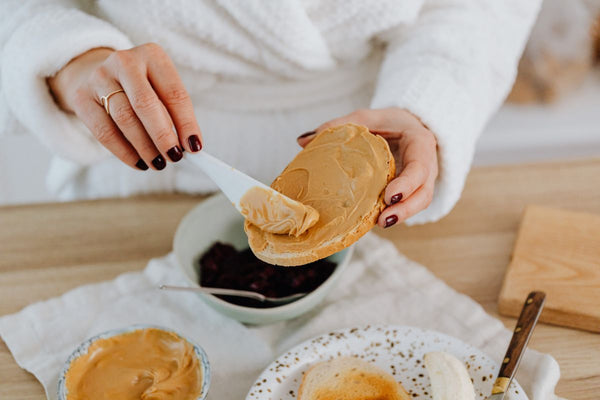
Yes, you can safely eat peanut butter while breastfeeding, if there is no family history of nut allergies.
Some studies suggest that introducing peanut products while breastfeeding might lower the risk of your baby developing a peanut allergy. As long as you consume peanut butter in moderation, such as two sandwiches a day, it should not harm your baby. However, overconsumption could potentially increase the chance of your baby developing a peanut allergy, as excess peanut butter can pass through breast milk (2).
If you have concerns about food allergies, it’s always a good idea to consult your doctor or health visitor. They can guide you on how to safely introduce new foods to your diet and monitor any reactions, especially if there’s a family history of allergies or if your baby has shown signs of sensitivity to peanuts.
Eating pâté while breastfeeding should be done with caution, depending on the type of pâté you're considering. There are two main types of pâtés: meat-based and liver-based.
While breastfeeding, or during pregnancy, the consumption of meat and liver-based pâtés is discouraged because they are more likely to contain Listeria. Listeria is a type of bacteria which can cause food poisoning and can lead to serious health complications for newborns or young children. Liver-based products also contain a high amount of Vitamin A which can be harmful to your baby.
However, the Cleveland Clinic suggests that most foods are safe to eat while breastfeeding, as long as they’re part of a well-rounded diet. If you’re craving pâté, you might want to consider vegetable pâté instead of meat-based pâté. Vegetable pâté is generally considered safe to eat while breastfeeding.
Although the chances of transmitting listeria to your baby through breastfeeding are considerably low, it’s encouraged that you choose other alternatives which are safer for you and baby.
To ensure the safety of your diet while breastfeeding, it's important to:
If you have concerns about consuming pâté while breastfeeding, you can always consult your doctor or a lactation consultant for more information.
Yes, you can eat chocolate while breastfeeding. Chocolate contains small amounts of caffeine and the stimulant theobromine (3), but the amount in chocolate is unlikely to affect your baby unless consumed in large quantities. Dark chocolate has higher levels of theobromine, while milk and white chocolate have less (4).
Most people can enjoy chocolate in moderation without issues. However, if your baby shows signs like irritability or sleep problems, try reducing your chocolate intake. Symptoms should subside within 3 to 7 days. Enjoy chocolate, but in moderation!
Source materials:
(1) Kaczor, A. Can I Eat Honey While Breastfeeding? Is It Safe? Pregnancy Food Checker. https://www.pregnancyfoodchecker.com/eat-honey-breastfeeding-safe/ (on 13.12.2022)
(2) Nursing Moms (2019). Can you eat peanut butter while breastfeeding? https://nursingmoms.net/can-you-eat-peanut-butter-while-breastfeeding/ (on 13.12.2022)
(3) Hure, A. et al. (2020). Dietary Practices During Pregnancy and Lactation. In Nutrition and Lifestyle for Pregnancy and Lactation. National Center for Biotechnology Information. https://www.ncbi.nlm.nih.gov/books/NBK532500/ (on 18.11.2024)
(4) La Leche League Canada (2022). Chocolate and breastfeeding. https://www.lllc.ca/chocolate-and-breastfeeding (on 18.11.2024)
by Lola&Lykke Team
Please Note
The information shared in this article is intended for general educational purposes only and should not replace medical advice, diagnosis, or treatment from a qualified healthcare professional. Every pregnancy, recovery, and feeding journey is different. If you have concerns about your health, your baby’s health, or any symptoms mentioned in our blogs, please speak with your doctor, midwife, or healthcare provider before making changes to your care routine.


