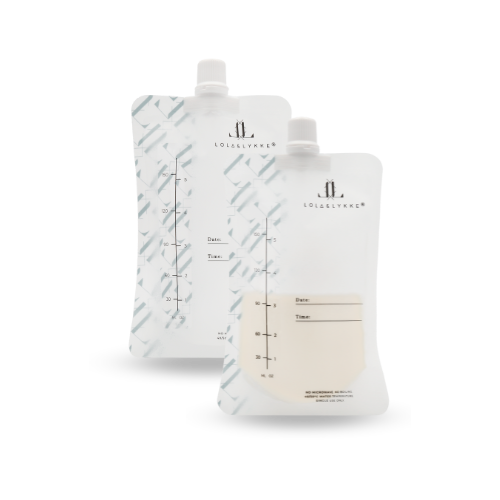
Thaw Safely
Thaw in the refrigerator or under warm running water.


Created in support of the Making Space initiative, this resource hub offers practical guidance for breastfeeding parents returning to work.
Save 25% on breastfeeding essentials designed to support your feeding journey.
Use at checkout • Cannot be combined with other offers
Getting Started
A little planning before your first day back can help make breastfeeding and pumping feel more manageable.
Every feeding journey is different, but having a plan for pumping breaks, milk storage, and equipment can help reduce stress and make the transition smoother.

A practical checklist to help you prepare for pumping, milk storage, and feeding while at work.


Freshly expressed milk can be kept at room temperature for up to 4 hours.

Store milk towards the back of the fridge where temperatures remain most consistent.

Freeze milk in small portions to make thawing and feeding easier.


Write the date and time on every storage bag or container to help keep track of freshness.

Use an insulated cooler bag with ice packs when transporting milk between work and home.

Always use sealed breast milk storage bags or food-safe containers designed for storing expressed milk.
Thaw in the refrigerator or under warm running water.
Once thawed, breast milk should not be frozen again.
Swirl gently, test on your wrist, and never reheat more than once.
Warm in warm water or a bottle warmer. Never use a microwave.
Breast Pump Guide
Choosing the Right Breast Pump for Your Routine
Different working environments call for different pumping solutions. Whether you're primarily pumping at home, expressing occasionally, or need complete flexibility on set, there are options designed for different stages and lifestyles.
← Swipe to compare →

|

|

|
|
Feature |
Smart Electric Breast Pump |
Bloome Wearable Breast Pump |
Manual Breast Pump |
Best for |
Regular or daily pumping |
Hands-free pumping on the go |
Occasional pumping or as a backup |
Pump type |
Electric |
Wearable, in-bra electric |
Manual |
Hands-free |
— |
✓ |
— |
Built-in heating |
— |
✓ |
— |
Hospital-grade suction |
✓ |
✓ (up to 339 mmHg) |
— |
Pumping modes |
4 modes |
4 modes |
Manual operation |
Suction levels |
9 levels |
9 levels |
2 levels |
External tubes |
— |
— |
— |
Power source |
Rechargeable |
Rechargeable |
No batteries or charging required |
Milk capacity |
150 ml |
180 ml |
200 ml |
Best suited for |
Building and maintaining milk supply |
Work, commuting, travel and busy days |
Travel, occasional expressing and emergency backup |
Meet the Organisations Behind The Project
Created in collaboration to help make breastfeeding at work more achievable through practical support, expertise and shared experience.

Lola&Lykke
Lola&Lykke is a Finnish maternal health company dedicated to supporting parents through pregnancy, postpartum, breastfeeding and beyond. Working closely with healthcare professionals, lactation experts and parents, Lola&Lykke develops thoughtfully designed products that make feeding and recovery more comfortable, practical and empowering.
Combining evidence-based design with real-life parent experiences, Lola&Lykke creates breastfeeding and postpartum solutions that fit around modern family life. From award-winning breast pumps to recovery essentials, every product is designed to help parents feel supported at every stage of their journey.
Alongside its products, Lola&Lykke is committed to improving access to breastfeeding education, expert support and workplace advocacy. Through partnerships, education and community initiatives, the company works to create a world where parents can continue their feeding journey with confidence—wherever life and work take them.

The Nourish Consultancy
The Nourish Consultancy works with employers, organisations and industry leaders to create more breastfeeding-friendly workplaces and cultures. Founded by breastfeeding expert, author and advocate Ruth Maguire, The Nourish Consultancy provides practical guidance, policy development, training and strategic support to help organisations better support parents during pregnancy, maternity leave and their return to work.
Drawing on both professional expertise and lived experience, The Nourish Consultancy bridges the gap between breastfeeding support and workplace practice, helping employers create environments where parents can thrive without compromising their feeding goals.
Through consultancy, education and advocacy, The Nourish Consultancy is committed to driving meaningful change and improving outcomes for breastfeeding families across a wide range of sectors.
WonderWorks
Not necessarily. Milk supply works on a supply-and-demand basis, so expressing milk regularly can help maintain your supply while you're away from your baby. Everyone's routine looks different, so it may take a little time to find a schedule that works for you.
This is very common. Stress, distractions, hydration, time pressure and an unfamiliar environment can all affect milk output. Lower output during a single session doesn't necessarily mean your milk supply is decreasing.
Yes. Pump parts that come into contact with breast milk should be cleaned according to the manufacturer's instructions. If you're unable to wash them straight away, keep them in a clean, sealed container until you can clean them properly.
A supportive workplace should provide a private, hygienic space for expressing, reasonable flexibility for pumping breaks, access to milk storage where possible, and a clear point of contact if adjustments are needed. Open communication before returning to work can help ensure these arrangements are in place.
Alongside your breast pump, it's helpful to pack milk storage bags or bottles, a cooler bag with ice packs, spare valves or membranes, nursing pads, a charging cable or batteries if needed, hand sanitiser and a small cloth for drying equipment. Keeping a checklist can help you avoid forgetting essentials.
Yes. Your baby's feeding habits, your work schedule and your milk supply will naturally change over time. Many parents adjust how often they pump, combine different pumps or gradually reduce pumping sessions as their breastfeeding journey evolves.
Speak with your employer before returning to work to discuss practical arrangements. A breastfeeding space doesn't need to be permanent, but it should be private, clean, comfortable and free from interruption. Employers have an important role in helping make this possible.
Continuing to breastfeed after returning to work shouldn't rely on determination alone. Access to appropriate facilities, protected time and supportive communication helps parents meet their feeding goals while continuing to contribute at work. That's why creating breastfeeding-friendly workplaces benefits both parents and employers.
Guidance to Support Your Feeding Journey

Imetyksen ja pumppaamisen yhdistäminen tarjoaa lukuisia hyötyjä sekä äidille että vauvalle. Seuraa vinkkejämme onnist...

Osittaisimetystä helpottaa selkeä aikataulu ja rutiini eri ruokintatapojen välillä, jolloin sekä sinä että vauva opit...
 Pumping
Synnytyksen jälkeinen aika pitää sisällään valtavasti uutta opeteltavaa, joten osaat takuulla arvostaa selkeitä ja no...

Tämä blogikirjoitus on luettavissa vain englanniksi. Vaihda sivun kieli englanniksi lukeaksesi artikkelin.

Äitiys on kiehtova matka, joka tuo mukanaan lukuisia valintoja. Yksi suurimmista päätöksistä on se, miten ja milloin ...
Every breastfeeding journey is different.
If you have questions about pumping, milk supply, flange sizing, returning to work, or feeding challenges, our team can help connect you with breastfeeding support resources and product guidance.