- Breastfeeding
- Oct 1, 2026

Whether you're preparing to breastfeed for the first time or several months in and looking for answers, you're in the right place. This page covers the most common breastfeeding questions - from getting started and building your milk supply to pumping, nutrition, travelling, and going back to work.
If you're dealing with a specific challenge, visit our Breastfeeding Challenges FAQ: for practical answers on pain, latch issues, cluster feeding, and more.
Jump straight to what you need:
Answered by Ann Bacon, Registered Nurse, Chair of WGH Advisory Board
Breastfeeding seems to get all the gold stars when it comes to feeding your little one, right? But let's be real, it's not always a smooth sailing journey for every new mum. Maybe you're not producing enough milk, your baby's having a tough time latching, or you've decided that breastfeeding isn't a right choice. And you know what? That's perfectly okay. Your baby will still get all the nutrients they need with plenty of other options out there.
Choosing whether or not to breastfeed is a personal decision. Fortunately, if you decide to opt for formula feeding, there are many high-quality infant formulas out there. These formulas are designed to provide your baby with all the nutrients they need for healthy growth and development. You can always have a chat with your midwife, health care provider, or your baby's doctor about which one to choose.
Now, here's something to remember. Whether you choose to breastfeed or not, about 2-3 days after having your baby, your milk will 'come in', and your breasts will become full and hard. If you don't plan to breastfeed, you can alleviate this discomfort by wearing a tight-fitting bra, placing ice packs on your breasts (15 min/hour), and taking ibuprofen as needed. It may take a few days for this period of engorgement to subside, but eventually, your body will recognize that 'the factory is closed', and your breasts will stop producing milk.
So, what happens when breastfeeding isn't on the table? For many of us, formula feeding becomes our best buddy. Designed to mimic breast milk, infant formula ensures your little one gets all the essential nutrients they need to grow and thrive. Plus, it's all hands-on deck with formula feeding. Mum, dad, grandma - anyone can feed the baby, which can give you a much-deserved breather and let others share those special bonding moments with the baby.
Formula isn't the only route though. You've also got the option of combo feeding, a mix of breastfeeding and bottle feeding. It's all about finding that sweet spot and easing the pressure of exclusive breastfeeding. If you're considering this, you might find our guide on how to combine breastfeeding and pumping super helpful.
Now, for those of you determined to breastfeed but finding it tougher than expected, don't stress. You're not alone and there's plenty of support available. Our breastfeeding e-guide is packed with useful tips and advice to help you over those hurdles.
And what about the emotional side of things? If you're feeling nervous or anxious about breastfeeding, take a deep breath and remember you're not the only one. Many of us have been there and come out the other side. Check out our article on why you're not alone if you're afraid to breastfeed.
So, whether you're all about breastfeeding, going the formula route, or mixing it up, the most important thing is your baby's fed and you're comfortable with your decision. Remember, you've got a whole community behind you. Our team of health experts are always here, ready to support you and share their advice on breastfeeding and other feeding methods.

Without pumping the breast, it’s hard to know the true volume your baby is getting from the breast and many mothers can be anxious their baby is not getting enough. There are a few easy ways to determine if your baby is getting enough.
During the first week of a baby’s life, you can normally expect your baby to have about 1 wet nappy on day 1, 2 wet nappies on day 2, 3 on day 3, and so on. After day 6, most newborn babies will have about 6-8 wet nappies. You can also monitor how often your baby poops. In their first three days, babies may have only 1-2 poop nappies, but after day 3, although it can vary between babies, on average they will have about 3 poop nappies per day.
While your baby is latched well and feeding, take a moment to watch and listen for swallows. If you find it hard to see while you have your baby at the breast, ask your partner to check, too. Seeing and hearing your baby swallow are good indications that they are getting milk while at the breast.
When the nurse makes home visits or at clinic visits, the health care provider will always weigh your baby to chart their growth. A baby’s average weight gain is about 25 grams per day for the first few months. Your healthcare provider will keep track of this to make sure that your baby is growing normally.
A baby's crying is normal but if your baby is crying excessively, not latching well, or not sleeping well after a feeding talk with your healthcare provider. They will determine what further investigation is needed and can connect you with a lactation consultant who can assess your baby’s latch, suck, to make sure they are getting all the milk they need.
It is also important for mothers to get the nutrients they need while breastfeeding! Breastfeeding utilizes an additional 500 kcal/day above your normal daily requirements. So it is necessary for a woman to eat an adequate amount and variety of nourishing and energy-providing foods while breastfeeding their baby.
Tip: Some foods - called galactagogues - have been reported to increase a woman's breast milk production. A few examples of these are oats, Brewer’s yeast, and fenugreek (herb) but every culture around the world has its own that they recommend. A lactation consultant can provide more information on these and other galactagogues.

Answered by Ann Bacon, Registered Nurse, Chair of WGH Advisory Board
Following your baby’s cues is often the best approach to determine when your baby is hungry and they don’t often require a schedule. Babies let us know they are hungry when they:
Newborn tiny stomachs require them to eat frequently. How often is this? Most newborns will eat about every two to three hours or about 8 - 12 times in a 24 hour period.
Following your baby's hunger cues rather than a strict schedule is usually the best approach, especially in the early weeks. As your baby grows, a more predictable pattern will naturally emerge.
In the first few days after birth, yes — if your baby is sleeping for more than three to four hours, it is worth waking them gently to feed, especially until your milk supply is established and your baby is back to their birth weight. After that, most babies will wake when hungry.
Babies who are breastfed may feed a bit more frequently since breastmilk is so easily digestible. Human milk can vary in fat and protein from one woman to the next and the type of breast milk a baby gets also changes from the start of the feeding to the end. For instance, the milk at the start of the feeding is often more watery which is helpful to quench a baby’s thirst, while the milk at the end of the breastfeeding session has more fat content and is more satiating, giving your baby a full feeling.
Babies born earlier than full-term at birth (39 weeks) may require a different schedule for feedings. Talk to your health care provider about your baby’s particular feeding needs.
Feeding time can be a moment for you to recharge, breathe, and connect with your baby. Breastfeeding releases oxytocin and prolactin, two “feel good” hormones that can provide you with a sense of well-being and reduce stress and anxiety. It can give you confidence knowing that you are providing your baby with antibodies and nutrients from breast milk which will benefit them for their entire life. However, regardless if you choose to breast or formula feed your baby, feeding time provides special moments for close contact and connection with your baby. Your baby will utilize all of their senses when they taste your milk, feel your touch, look at your face, smell your scent, and hear your voice.
Tip: Most health care providers recommend not introducing solid foods to your baby until they are about 6 months old.

The first two weeks of breastfeeding are the most important for establishing your milk supply - and often the most challenging. The key is to start as soon as possible after birth, ideally within the first hour, with skin-to-skin contact helping to encourage your baby to latch naturally.
Getting the latch right is the foundation of successful breastfeeding. Position your baby tummy to tummy with you, encourage them to open their mouth wide, and bring them to your breast - not your breast to them. You should feel a strong pulling sensation, not pain. If it hurts, break the suction gently and try again.
In the first days, you will produce colostrum - a thick, nutrient-rich early milk packed with antibodies. This is all your baby needs. Your full milk supply usually comes in two to three days after birth. From there, aim to feed every two to three hours, or eight to twelve times in a 24-hour period, and follow your baby's hunger cues rather than the clock.
Learn more: What to Expect During the First 2 Weeks of Breastfeeding
Combining breastfeeding and pumping gives you flexibility while keeping your milk supply strong. Your body produces milk on a supply and demand basis, so the more you stimulate your breasts - whether through nursing or pumping - the more milk you will produce.
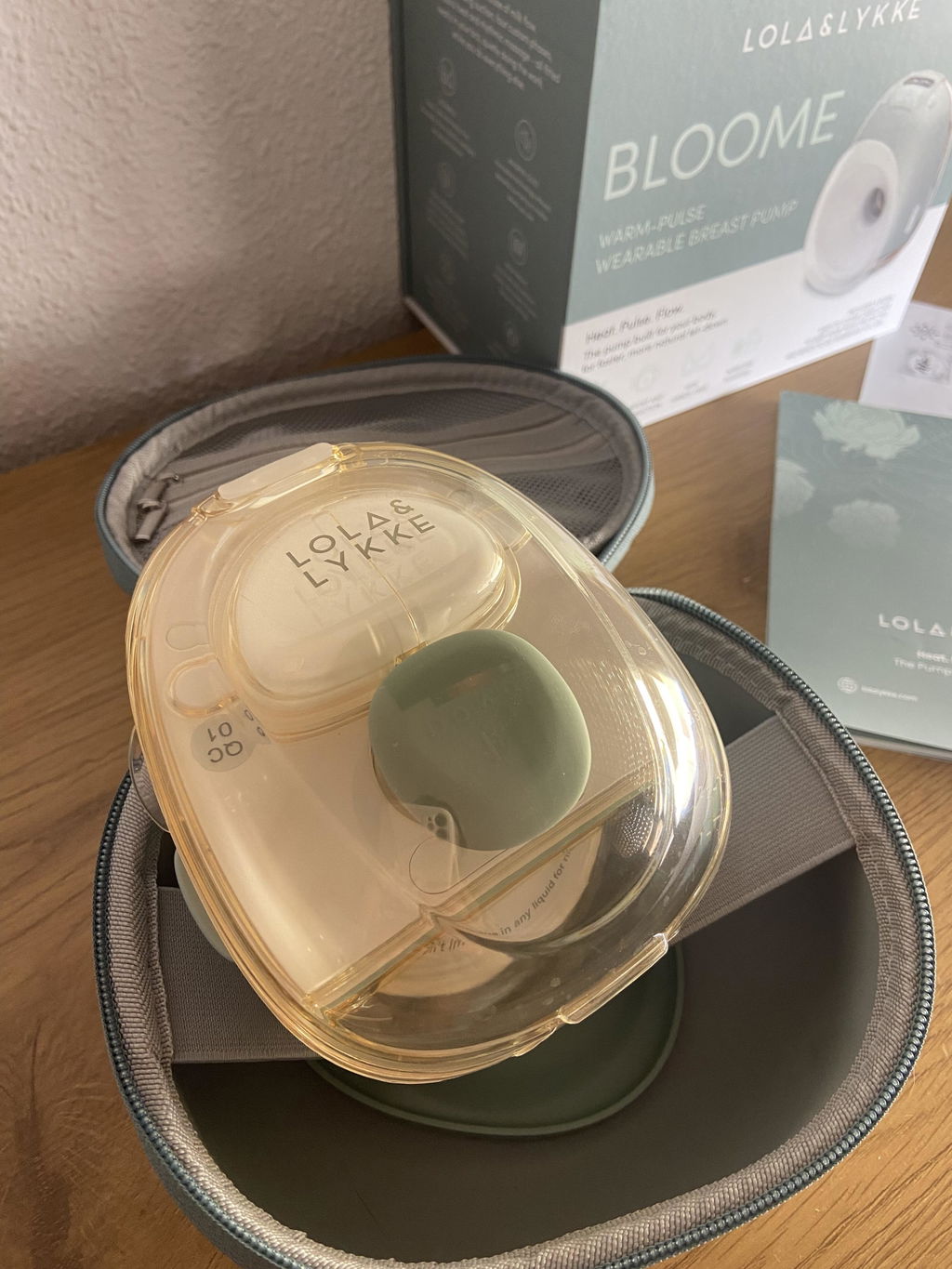
A good starting point is to breastfeed your baby first, letting them drink from both breasts, and then pump immediately afterwards to fully drain each breast. Morning is often the best time to pump as your supply tends to be at its highest. If you are returning to work, start building a freezer stash a few weeks before you go back by adding one pumping session a day. A wearable breast pump like the Lola&Lykke Bloome makes pumping at work even easier - it sits discreetly inside your bra, so you can express milk without anyone noticing, whether you're in a meeting or at your desk.
If you want to increase your supply, try power pumping - mimicking cluster feeding by pumping frequently over a one-hour period. Massaging your breasts before and during pumping also helps stimulate milk flow.
Learn more: Balancing Breastfeeding and Pumping: Practical Tips for Busy Mothers
If you feel your supply is low, the most effective approach is to increase how often you stimulate your breasts. Breastfeed or pump more frequently, as your body responds directly to demand. Try not to skip sessions, stay well hydrated, and eat enough calories - breastfeeding burns around 300 to 500 extra calories a day.
Some foods known as galactagogues have been reported to support milk production, including oats, fennel, flaxseed, almonds, dark leafy greens, and garlic. Lactation teas and smoothies containing herbs like fenugreek and thistle are also popular - just check with your healthcare provider before adding these to your routine.
Breast massage before and during feeds or pumping sessions can also help encourage letdown, especially when combined with warmth.
Learn more: How to Increase Breast Milk Supply

Newborns have tiny stomachs and need to feed frequently - typically every two to three hours, or eight to twelve times in a 24-hour period. Rather than following a strict schedule, the best approach is to feed on demand, watching for your baby's hunger cues such as rooting, sucking on their hands, or making lip-smacking sounds. Crying is a late hunger cue, so try to feed before it gets to that stage.
Each feeding session should last around 20 to 30 minutes. Always allow your baby to fully drain one breast before offering the second, as the hindmilk at the end of a feed is richer in fat and calories.
As your baby grows, feeding sessions will become less frequent and more predictable. Around six weeks, most babies go through a growth spurt and may want to feed more often temporarily - this is completely normal.
While breastfeeding, your body needs around 300 to 500 extra calories a day, so eating enough and eating well is essential. Focus on a varied, nutrient-rich diet that includes plenty of vegetables, whole grains, lean proteins, healthy fats like oily fish and nuts, and calcium-rich foods like dairy or leafy greens.
Key nutrients to pay attention to include vitamin D, B12, omega-3 fatty acids, iron, calcium, and folate. If your diet is limited or plant-based, supplements may be worth considering.
Foods to limit include excessive caffeine (no more than two to three cups of coffee a day), alcohol, and high-mercury fish such as tuna, shark, and swordfish.
Learn more:
Breastfeeding Diet: What to Eat While Breastfeeding
Can Your Diet Affect the Quality of Breast Milk?
Colic and Foods to Avoid While Breastfeeding

Yes, absolutely. Despite common misconceptions, having a C-section does not prevent you from breastfeeding. In most cases you can begin breastfeeding shortly after delivery, sometimes even while still in the operating room. If you want to breastfeed early, include this in your birth plan and let your medical team know ahead of time.
Some C-section mums experience a short delay in their full milk coming in, as well as some discomfort finding comfortable feeding positions while the incision heals. The side-lying position and the football hold are both recommended after a C-section as they keep your baby's weight away from the scar.
If you are temporarily separated from your baby or your milk is slow to come in, pumping or hand expressing colostrum as soon as possible after birth will help get your supply started.
Learn more: Breastfeeding After a C-Section
Yes, and many mothers do so successfully. The key is planning ahead. Before you return, start building a freezer stash of expressed milk, introduce your baby to bottle feeding a couple of weeks in advance, and speak to your employer early about your needs - EU law requires employers to provide a clean, private space to pump and adequate breaks to do so.
At work, aim to pump as often as your baby would normally feed - usually every two to three hours. A wearable breast pump like the Lola&Lykke Bloome makes this much easier to fit into a busy working day - it sits discreetly inside your bra with no tubes or wires, so you can pump during a meeting, at your desk, or on your commute without anyone knowing. Keep going with on-demand breastfeeding in the evenings and at weekends to maintain your supply and your bond with your baby.
Learn more: A Guide for Breastfeeding Mums Returning to Work
Breast milk doesn't lose its value at six months - it continues to provide important nutrients, antibodies, and immune-boosting properties well into toddlerhood. According to the World Health Organization, breastfeeding up to two years or beyond is beneficial as long as it is mutually desired by both mother and child.
From six months onwards, breast milk complements solid foods rather than replacing them, filling nutritional gaps and continuing to support your baby's immune system, brain development, and emotional wellbeing. Studies suggest breast milk can still supply up to 29% of a toddler's energy needs. For mothers, continued breastfeeding is associated with a reduced risk of breast cancer, ovarian cancer, and type 2 diabetes.
Best way to travel with breast milk? Travelling with breast milk is very manageable with the right preparation. If you are flying, most airlines and airports allow you to carry breast milk in your hand luggage - check the specific rules of your airline before you travel.
For pumping on the go, a manual breast pump is a reliable travel companion. Unlike electric pumps, it requires no battery or power source, making it ideal as a backup or for use in situations where you don't have access to a plug socket. The Lola&Lykke Manual Breast Pump is compatible with our breast milk storage bags, so you can pump directly into the bag - no transferring, no wasted milk.
Our breast milk storage bags are also compatible with the Lola&Lykke Smart Electric Breast Pump, so whether you're using electric or manual at home and on the go, your system stays consistent. You can attach a teat directly to the bag for feeding, so there is no need to transfer milk to a bottle at any stage. Use an insulated cooler bag with ice packs to keep milk fresh for up to 24 hours while travelling.
by Lola&Lykke Team
Please Note
The information shared in this article is intended for general educational purposes only and should not replace medical advice, diagnosis, or treatment from a qualified healthcare professional. Every pregnancy, recovery, and feeding journey is different. If you have concerns about your health, your baby’s health, or any symptoms mentioned in our blogs, please speak with your doctor, midwife, or healthcare provider before making changes to your care routine.